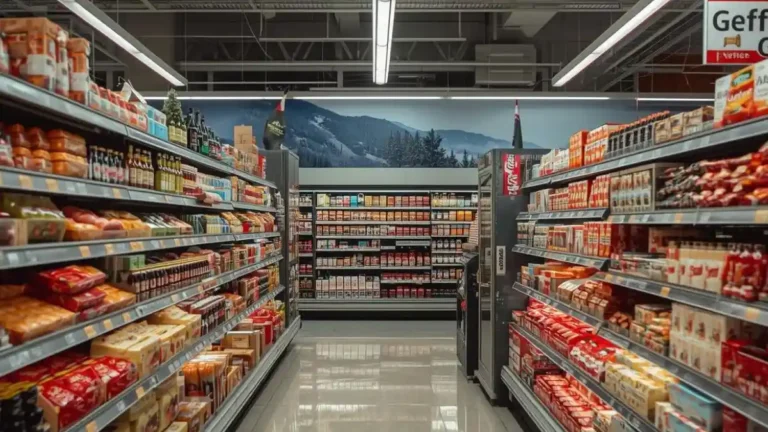

Norway’s grocery trade is built around a small number of supermarket operators. They have outsized influence over national food distribution, pricing and supplier access.
The top 10 supermarkets in Norway are:
- KIWI
- REMA 1000
- Coop Extra
- Meny
- SPAR
- Joker
- Coop Mega
- Coop Prix
- Bunnpris
- Coop Obs!
These chains operate inside a market where NorgesGruppen, Coop Norge and Reitan Retail hold dominant positions. Bunnpris remains the main independent challenger.
This ranking uses a hybrid method. It is based on store network scale, format strength, market role and structural importance to Norway’s supermarket supply chain.
Key market figures
Norway is also one of Europe’s most concentrated grocery markets:
- 43.5%: NorgesGruppen’s approximate share of the national grocery market in 2024
- More than 96%: the share of food retail sales controlled by the three largest retail groups together
That concentration shapes pricing competition, supplier relationships, logistics systems and the overall structure of the Norwegian grocery supply chain.
Ranking Table
| Rank | Chain | HQ | Parent / Owner | Latest Fiscal Reference | Structural Role |
|---|---|---|---|---|---|
| 1 | KIWI | Oslo | NorgesGruppen | NorgesGruppen FY2024 operating income NOK 117.8bn | National discount chain |
| 2 | REMA 1000 | Oslo | Reitan Retail | Reitan Retail FY2024 group reporting | Discount supermarket network |
| 3 | Coop Extra | Gjelleråsen | Coop Norge | Coop Norge FY2024 | Largest Coop discount format |
| 4 | Meny | Oslo region | NorgesGruppen | NorgesGruppen FY2024 | Premium supermarket format |
| 5 | SPAR / Eurospar | Oslo region | NorgesGruppen | NorgesGruppen FY2024 | Regional supermarket network |
| 6 | Joker | Oslo region | NorgesGruppen | NorgesGruppen FY2024 | Local neighbourhood stores |
| 7 | Coop Mega | Gjelleråsen | Coop Norge | Coop Norge FY2024 | Full-service supermarket |
| 8 | Coop Prix | Gjelleråsen | Coop Norge | Coop Norge FY2024 | Neighbourhood discount stores |
| 9 | Bunnpris | Trondheim | I.K. Lykke / Bunnpris | 2024 revenue approx. NOK 7.6bn | Independent supermarket chain |
| 10 | Coop Obs! | Gjelleråsen | Coop Norge | Coop Norge FY2024 | Hypermarket format |
Revenue references reflect the latest available fiscal reporting where individual supermarket chains do not publish standalone financial statements.
1. KIWI
- Founded: 1979
- Headquarters: Oslo, Norway
- FY Revenue: Included within NorgesGruppen FY2024 operating income of about NOK 117.8 billion
- Employees: Not separately disclosed
Core Segments
- Discount grocery retail
- Fresh food and packaged consumer goods
- Private label grocery products
- National supermarket store network
Operational Relevance
KIWI is one of the most widely distributed supermarket chains in Norway. It operates a dense network of discount grocery stores across the country.
The chain forms a central pillar of NorgesGruppen’s retail structure. It benefits from the group’s integrated wholesale and logistics network.
The supermarket format focuses on simplified store layouts and a carefully selected range of everyday grocery products.
Fresh produce, dairy products, packaged foods and household staples form the core of the offer. This allows high product turnover and efficient supply chain management.
Market Position
KIWI is widely considered the leading supermarket chain in Norway by individual brand market share.
The chain has long competed directly with REMA 1000. This price-driven rivalry has shaped competition across the Norwegian grocery market.
Its scale and operational efficiency let it keep strong purchasing power within the national grocery supply chain.
Strategic Direction
The chain continues to focus on operational efficiency, strong private label portfolios and logistics optimisation.
Continued investment in distribution systems and store productivity supports its position in Norway’s highly competitive discount supermarket segment.
2. REMA 1000
- Founded: 1979
- Headquarters: Oslo, Norway
- FY Revenue: Included within Reitan Retail group reporting
- Employees: Not separately disclosed
Core Segments
- Discount supermarkets
- Franchise-operated retail stores
- Private label grocery products
- National grocery distribution
Operational Relevance
REMA 1000 operates one of the largest supermarket store networks in Norway. It forms the grocery retail arm of Reitan Retail.
The chain uses a franchise model. Individual store managers operate local supermarkets within a nationally coordinated retail system.
Stores are designed around efficiency and competitive pricing. A focused product range allows simplified procurement and logistics operations.
Market Position
REMA 1000 remains one of the most influential supermarket brands in Norway. It competes directly with KIWI and Coop Extra in the country’s dominant discount segment.
Its nationwide coverage and strong brand recognition give it a central role in shaping grocery pricing and supplier relationships.
Strategic Direction
The company continues to invest in franchise development, supply chain optimisation and private label product expansion. This supports its position in the Norwegian supermarket market.
3. Coop Extra
- Founded: 2006
- Headquarters: Gjelleråsen, Norway
- FY Revenue: Included within Coop Norge FY2024 reporting
Core Segments
- Discount grocery retail
- Cooperative supermarket ownership
- National store network
- Private label grocery products
Operational Relevance
Coop Extra is the largest and fastest-growing supermarket format within the Coop Norge cooperative retail group.
The chain operates a large national network of discount supermarkets. These serve both urban and regional communities.
The organisation is collectively owned by Norwegian members. This cooperative model influences how the group approaches pricing, sourcing and retail operations.
Market Position
Coop Extra has become Coop Norge’s main competitive response to the discount dominance of KIWI and REMA 1000. The chain now represents the largest share of Coop’s grocery retail activity.
Strategic Direction
Future expansion is expected to focus on further strengthening the discount supermarket format. Coop Extra will also keep investing in logistics infrastructure and private label product development.
4. Meny
- Founded: 1992
- Headquarters: Oslo region
- FY Revenue: Included within NorgesGruppen FY2024
Core Segments
- Premium supermarkets
- Fresh food and specialty groceries
- Full-service supermarket retail
- Large basket grocery shopping
Operational Relevance
Meny represents the premium full-service supermarket format within the NorgesGruppen retail portfolio.
The chain focuses on high-quality fresh food departments, a wider product selection and service-oriented retail environments.
Market Position
Discount chains dominate the Norwegian grocery market. Even so, Meny remains one of the strongest full-service supermarket brands.
Its emphasis on fresh foods, deli counters and premium grocery products sets it apart from price-focused competitors.
Strategic Direction
Meny continues to develop its premium supermarket identity through investment in fresh food and broader product ranges.
5. SPAR / Eurospar
- Founded in Norway: 1984
- Headquarters: Oslo region
- FY Revenue: Included within NorgesGruppen FY2024
Core Segments
- Full-service supermarkets
- Regional grocery retail
- Mid-sized supermarket formats
- Community-focused stores
Operational Relevance
SPAR and Eurospar give NorgesGruppen a supermarket format that sits between discount stores and premium supermarkets. The chain has strong coverage in regional markets and smaller communities.
Market Position
SPAR’s broad geographic coverage makes it one of the most embedded supermarket systems in Norway. The brand operates under licence from the international SPAR retail network.
Strategic Direction
The chain continues to focus on regional supermarket coverage and strengthening community-based grocery retail.
6. Joker
- Founded: 1997
- Headquarters: Oslo region
- FY Revenue: Included within NorgesGruppen FY2024
Core Segments
- Local neighbourhood grocery stores
- Small-format supermarkets
- Convenience-oriented food retail
- Rural and regional retail coverage
Operational Relevance
Joker operates one of the most widespread local grocery networks in Norway, especially in smaller communities and rural areas.
Market Position
The chain plays a crucial role in maintaining local food access across the country. It is one of the most extensive convenience-oriented supermarket networks.
Strategic Direction
Joker continues to focus on maintaining local grocery access while supporting community-based retail.
7. Coop Mega
- Founded: 1987
- Headquarters: Gjelleråsen, Norway
- FY Revenue: Included within Coop Norge FY2024
Core Segments
- Full-service supermarkets
- Fresh food and specialty groceries
- Larger product assortments
- Premium cooperative retail
Operational Relevance
Coop Mega is the premium supermarket format within the Coop Norge portfolio. It offers larger product ranges and strong fresh food departments.
Market Position
The chain competes directly with Meny in the premium supermarket category.
Strategic Direction
The format continues to emphasise quality fresh food and expanded product selection.
8. Coop Prix
- Founded: 1984
- Headquarters: Gjelleråsen, Norway
- FY Revenue: Included within Coop Norge FY2024
Core Segments
- Neighbourhood grocery stores
- Discount supermarket retail
- Small-format grocery outlets
- Community-based retail
Operational Relevance
Coop Prix operates smaller discount supermarkets designed for local grocery shopping.
Market Position
The chain is smaller than Coop Extra. However, it keeps a strong regional presence across Norway.
Strategic Direction
Coop Prix continues to focus on convenience and neighbourhood accessibility.
9. Bunnpris
- Founded: 1981
- Headquarters: Trondheim, Norway
- FY Revenue: about NOK 7.6 billion in 2024
Core Segments
- Small-format discount supermarkets
- Convenience grocery stores
- Independent supermarket retail
- Local neighbourhood outlets
Operational Relevance
Bunnpris is the most significant independent supermarket chain operating outside the three dominant Norwegian grocery groups.
Market Position
Despite its smaller scale, the chain keeps national relevance through its convenience-oriented store network.
Strategic Direction
Bunnpris focuses on flexible store formats and strong local market positioning.
10. Coop Obs!
Headquarters: Gjelleråsen, Norway
FY Revenue: Included within Coop Norge FY2024
Core Segments
- Hypermarket retail
- Grocery and non-food merchandise
- Large-format shopping destinations
- Family shopping centres
Operational Relevance
Coop Obs! operates large hypermarket-style stores. These combine grocery retail with broader consumer goods categories.
Market Position
These hypermarkets are fewer in number than supermarket formats. However, they serve as major retail destinations in larger cities.
Strategic Direction
The format continues to focus on destination retail and broad product ranges.
Structural Analysis: Norway’s Concentrated Supermarket Market
Norway’s grocery retail sector is among the most concentrated in Europe. NorgesGruppen, Coop Norge and Reitan Retail together dominate the national supermarket landscape.
This concentration shapes how products move through the country’s food distribution system.
Retail groups operate large wholesale operations and logistics networks. These connect food manufacturers with supermarket shelves across the country.
The concentration also influences supplier negotiations, private label development and pricing strategies across the industry.
Structural Analysis: Discount Supermarkets vs Full-Service Formats
Discount supermarkets dominate the Norwegian grocery landscape.
Chains such as KIWI, REMA 1000 and Coop Extra attract the majority of weekly grocery shoppers. They do this through competitive pricing and simplified store formats.
Full-service supermarkets such as Meny and Coop Mega provide broader ranges and stronger fresh food departments.
Together these formats let retail groups address multiple consumer segments within the same market.
Structural Analysis: Private Label Growth
Private label products have become increasingly important in Norwegian supermarkets. Retail groups have expanded their own-brand portfolios to compete with national food brands.
These retailer-owned brands help in three ways:
- they strengthen purchasing power
- they allow greater pricing flexibility
- they provide differentiation across competing supermarket chains
Private label development remains a central strategy for major Norwegian grocery retailers.
Frequently Asked Questions
Which is the leading supermarket chain in Norway?
KIWI is widely considered the leading supermarket chain in Norway by individual brand market share. It is owned by NorgesGruppen and competes directly with REMA 1000.
How concentrated is Norway’s grocery market?
NorgesGruppen held roughly 43.5% of the national grocery market in 2024. The three largest retail groups together control more than 96% of food retail sales.
Which is the largest independent supermarket chain in Norway?
Bunnpris is the most significant independent chain outside the three dominant groups. Based in Trondheim, it reported revenue of about NOK 7.6 billion in 2024.
Conclusion
The Top 10 Supermarkets in Norway show how a small group of retailers drives the country’s grocery market.
Discount chains such as KIWI, REMA 1000 and Coop Extra dominate everyday shopping. Full-service formats like Meny, SPAR and Coop Mega offer wider ranges and stronger fresh food departments.
Together these chains form the backbone of Norway’s supermarket system. They link food producers, suppliers and consumers across the country.
Their purchasing power also shapes the wider Norway FMCG market and influences product development in the Norway private label sector.
It also supports domestic sourcing through the Norway fresh produce industry, which remains central to the national grocery supply chain.
Editor’s Note: This article is based on publicly available corporate reports and industry data related to Norway’s supermarket sector. Revenue figures refer primarily to FY2024 results where available. Where individual supermarket chains do not publish separate financial statements, revenue references reflect parent retail group reporting.
Currency values are expressed in Norwegian kroner (NOK).